
Who Needs GST Registration?
GST Registration is required for certain businesses and taxpayers in India. Whether a business needs to register depends on its annual turnover, type of business, nature of supply, location, and other applicable GST rules.
Understanding the registration limits can help business owners know when they need to register.
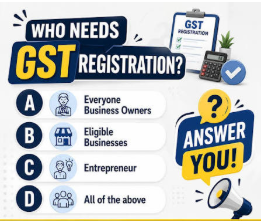
Who Needs GST Registration Under GST Rules
GST Registration generally becomes mandatory when a business crosses the applicable turnover threshold.
However, some categories may require registration even when their turnover is below the normal limit.
Turnover Limit for Services
For many service providers, the general threshold for GST Registration is ₹20 lakh aggregate turnover in a financial year.The threshold can be different in certain specified States and Union Territories. Therefore, service providers should check the applicable limit for their location.
Turnover Limit for Goods
For businesses supplying goods, the general threshold can be ₹40 lakh aggregate turnover in a financial year, subject to applicable conditions.
A lower threshold may apply in certain States and Union Territories. The applicable limit should therefore be checked before deciding whether registration is required.
Businesses Below the Turnover Limit
A business below the normal turnover limit may still need. if it falls under a category where registration is mandatory under the applicable GST provisions.
Therefore, turnover alone does not always determine registration liability.
Who May Need Mandatory Registration?
GST Registration may be required for certain categories, such as:
– Certain persons making taxable inter-State supplies
– Casual taxable persons
– Non-resident taxable persons
– Persons liable to pay tax under specified reverse-charge provisions
– Certain suppliers operating through e-commerce platforms
– Input Service Distributors
– Other categories covered by the applicable GST provisions
Section 24 of the CGST Act contains provisions for certain categories that may require registration irrespective of the normal turnover threshold.
Who Does Not Generally Need Registration?
Some persons may not be liable for GST Registration under the applicable provisions.
For example, persons exclusively supplying wholly exempt or non-taxable goods or services may not be required to register, subject to the relevant rules.
Businesses should check their exact activities before making a decision.
To determine whether GST Registration is required, a business should consider:
1. Annual aggregate turnover
2. Type of goods or services supplied
3. Location of the business
4. Whether supplies are made across State or Union Territory boundaries
5. Whether the business falls under a mandatory registration category
These factors can help a business understand its registration obligation.
GST Registration helps eligible businesses comply with applicable GST requirements.
After registration, the business receives a GSTIN and can carry out GST-related activities according to the applicable rules.
Conclusion
Knowing GST Registration requirements is important for every business owner. The applicable turnover limit may depend on whether the business supplies goods or services and where it operates.
Because certain businesses may require registration even below the normal turnover threshold, it is important to check the applicable GST provisions before making a decision.
